Wednesday, 26 July 2017

Coding


In today’s digital world, coding is a fundamental skill alongside math and reading. Learning to code is similar to learning a second language. Today we experimented with Scratch Jr. Children were modelled some of the basic skills and then  given their only instruction, "to be creative".  Here is a brief snapshot of what they came up with.


Monday, 3 July 2017

The Piano

This was a short survey to see if children could judge the emotion of the main character as the events unfolded. The main character began by playing his piano and many memories from the past returned to him.

Children had to give his emotions a figure between 0 and 10 - with 0 being terribly unhappy and 10 being overwhelmingly joyful.


As a class we studied the results and discussed why we judged  these feelings the way we did.


Watch the video below. Can you judge the emotion of the main character?


Children then had to discuss a time when they had felt unhappy and write about these feelings.


Friday, 30 June 2017

How to make a parachute?

Here are Summer's instructions on how she made her parachute. Are the instructions clear? Has she included bossy verbs? Are her sentences direct and to the point? Would you get muddled if you followed her instructions?


How to make a parachute?

What you need

-Plastic sheet.
-Tape.
-String.
-Cork.
-Scissors.
-Vivid.

Instructions 
.
1. Grab your plastic sheet.

2. Cut your plastic sheet into a square.

3. Grab four pieces of string.

4. Cut your string into four medium strings.

5. Cut four holes in the end of your square.

6. Insert your string into the holes.

7. Tie the string together.

8. Attach the cork to the string.

9. Finally go outside and see if it lands softly, if not make improvements.
 .
10. Once done put detailed designs on it!


By Summer! :D


Thursday, 29 June 2017

Designing and creating cars

We have been looking into 'How Stuff Works' and designed our own cardboard, balloon cars.

Balloon cars move forward when air is blown through a straw into the balloon and the car is released onto a flat surface. The air pushes out of the straw and forces the car moves forward. 

Here we are testing our cars


Tracey Tawhiao

Students will:
- Investigate the purpose of objects and images from past and present cultures and identify the contexts in which they were or are made, viewed, and valued.
- Develop and revisit visual ideas, in response to a variety of motivations, observation, and imagination, supported by the study of artists’ works.
- Describe the ideas their own and others’ objects and images communicate.
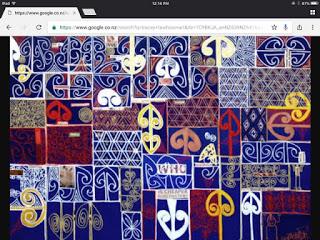
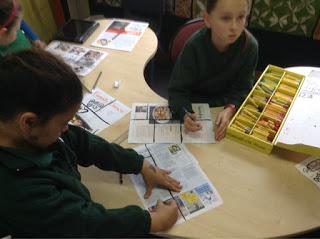
We learnt that Tracey Tawhiao is a famous NZ artist who creates her drawings on newspapers. We listed questions that we would like answered to find out more about her. We then did some research and shared it with the class.


What inspires her creativity? What motivates her? Why she is famous? How does she give back to society? What visual features do her artworks display? What messages does she try to communicate?  


Koru 2 then attempted to create their own artworks inspired by Tracey Tawhiao and our own individual cultural identities. We looked closely at the different patterns in maoridom and the meaning and significants of these.


Friday, 23 June 2017

Koru 2’s Learning Conferences

Children should be proud of the way they went about sharing their learning and new collaborative environment with whanau.


Children shared learning about maths, reading, writing, inquiry, our Licence System, our Class Treaty and Online Learning.

Thursday, 22 June 2017

Poetry

Putting pictures in our minds is one way poets and other writers get their message across. These pictures are called images or imagery.
The language that is used to produce these pictures is called figurative language, because the words do not have their everyday meaning (literal meaning) but another meaning (figurative meaning) which our imagination helps to create.

To help with ideas we watched a video that had beautiful images of NZ landscapes. Koru 2 then explored some of the language features that can be used in poetry; similes, metaphors, and personification.

Can you identify some of the language features in our poems?


My Memoirs

Goal - I’m learning to write a memoir of my life at Bromley School Purpose - A memoir  must show how your life was  changed due t...